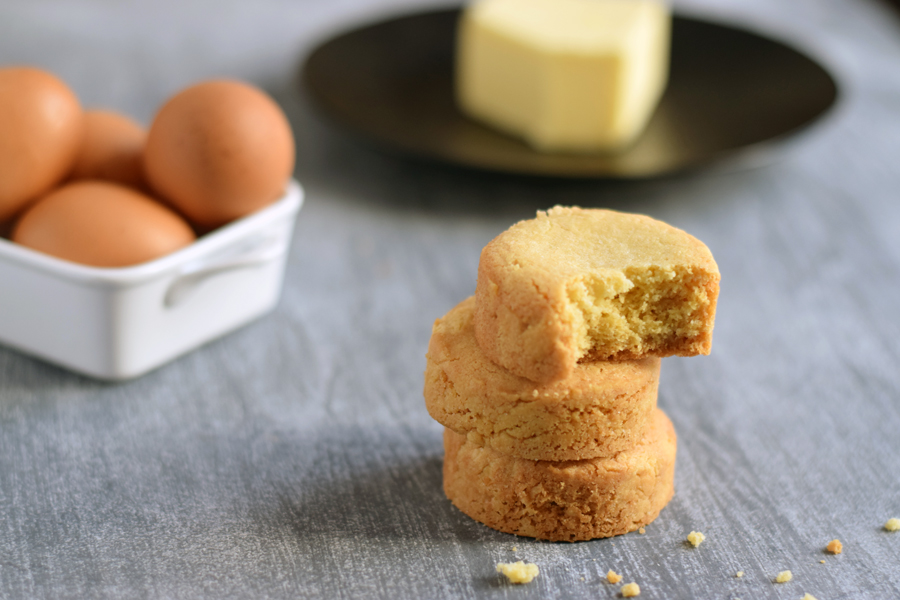
Who has never cracked at snack time for small Breton shortbread? Until very recently, I had never done it myself. But one day when I was looking for a quick snack with few ingredients, this recipe stood out for its simplicity. Since then, it’s my secret trick that I pull out when I need a quick and easy snack!
Origin of Breton shortbread
Breton shortbread was originally prepared by Breton housewives for their energetic quality and their long shelf life. This makes it the ideal biscuit for times of war and long sea trips. It was in the 20th century that the Traou Mad pastry shop devoted itself exclusively to this biscuit and made it a symbol of Brittany recognized worldwide! Local producers are also discussing the possibility of obtaining the Indication Géographique Protégée label”.
The real recipe for Breton shortbread
Breton shortbread, also called Breton biscuit, is of course a recipe prepared with salted butter. Forget recipes that add salt independently. For the rest of the ingredients, get good flour and free-range eggs (if you can) and you’ll have everything you need to make the real Breton shortbread recipe!
Which flour for a good Breton shortbread?
For traditional Breton shortbread, you can use either T45 or T55 flour. It is also possible to put 50% buckwheat flour to bring a slightly more authentic taste. For a gluten-free version, you can use rice flour.
How to make a Breton shortbread?
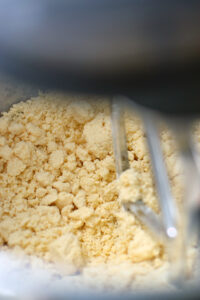
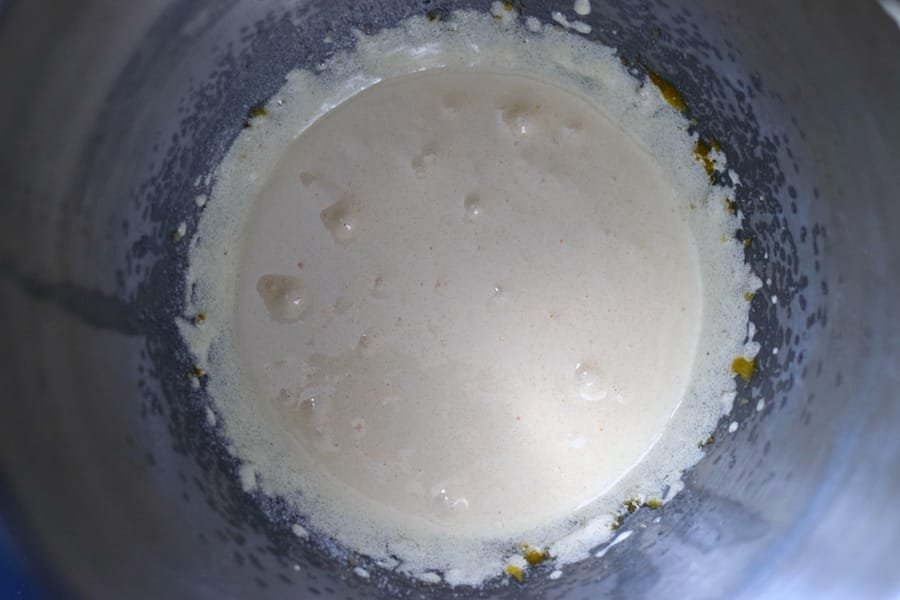
As I told you in the intro, making a Breton shortbread is quite easy and quick. First sift the flour with the baking powder. Next, whiten the egg yolks with the sugar. When it has tripled in volume, add the flour and baking powder. Once the mixture is homogeneous, it is time to add the softened salted butter (at room temperature, therefore, not melted). Mix again until all the ingredients are well combined. No technical difficulty, the success of the recipe lies above all in the cooling time.
Make very thick Breton shortbread?
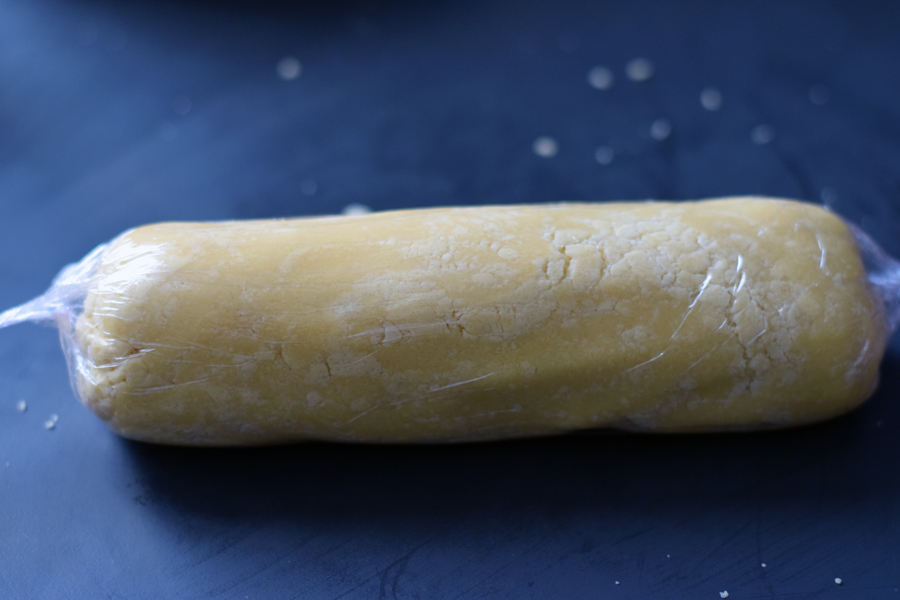
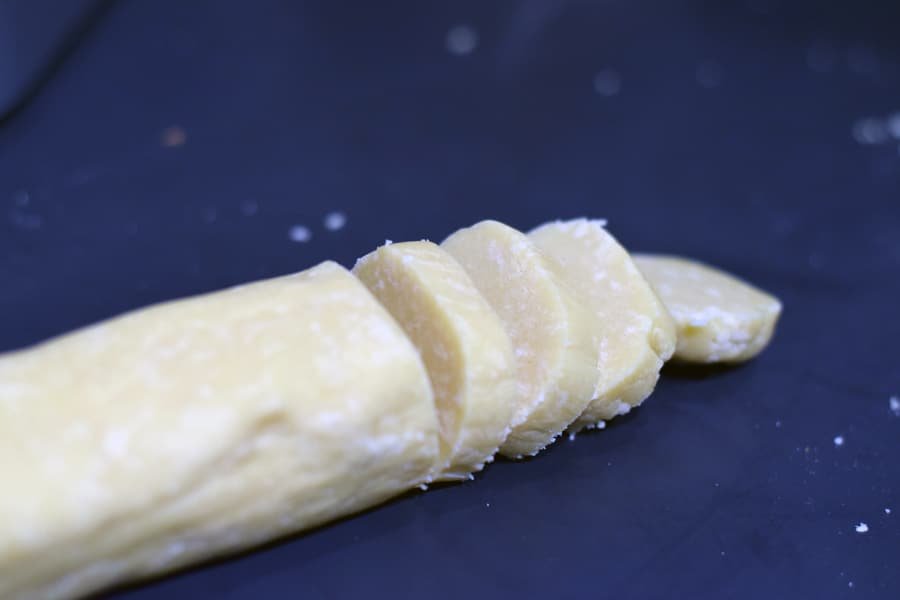
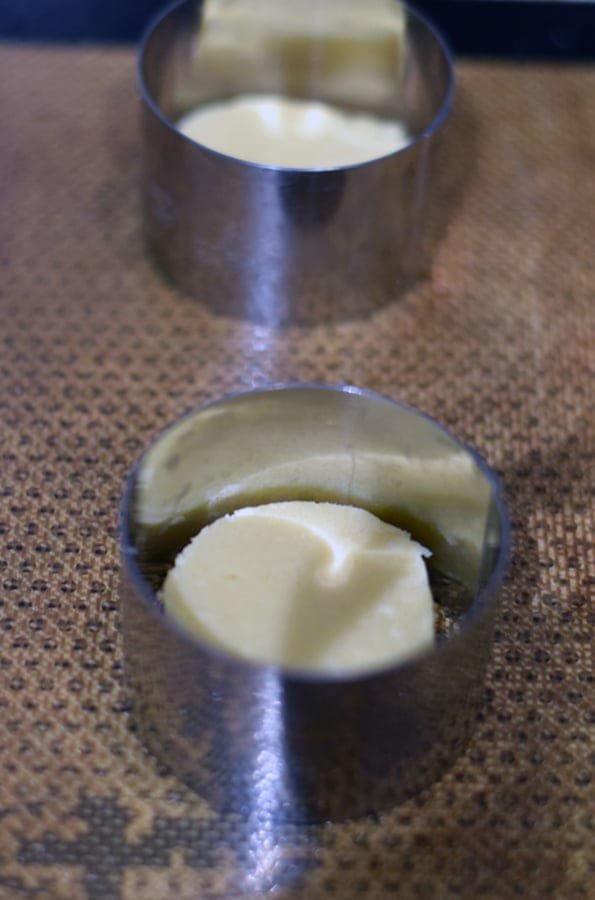
Once the dough is finished, it must be cooled in order to be able to detail it. For this, we make a sausage of dough in plastic film. After a passage in the fridge (about 1 hour), the dough is ready to be cut into 0.5 cm slices (more if you want them really thick. And to keep the round shape, I advise you to cook them in individual circles. This is the secret to obtaining very round and thick Breton shortbread.
Cooking
Place the slices of dough on a baking sheet covered with a silpat sheet (I only use that now and it’s really the best!). The shortbreads are cooked for 15 to 20 minutes in an oven heated to 165°C. They’re done when they look dry and the edge is lightly browned.
How to store Breton shortbread?
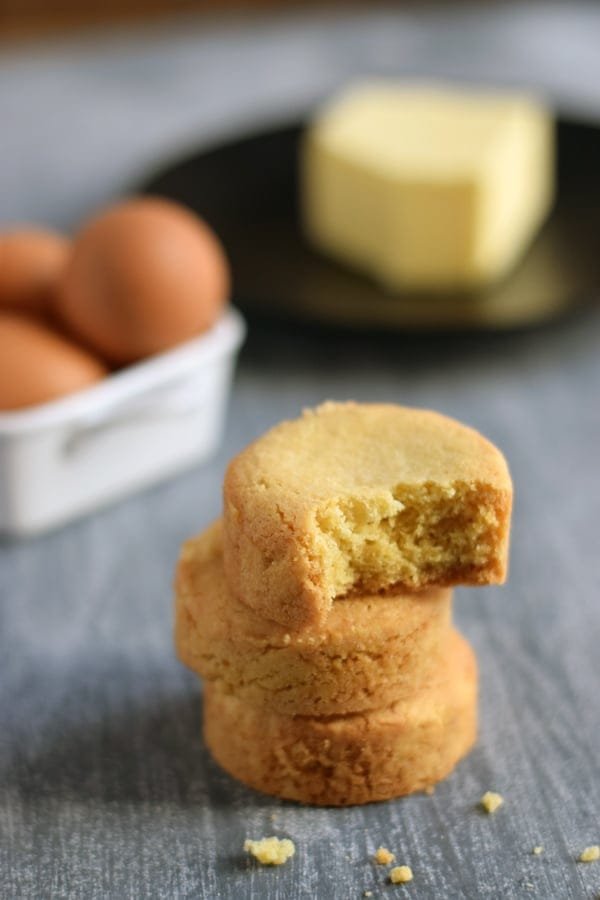
These little Breton shortbread cookies never last long, but if there are any left after the first pass, you can keep them for a week in an airtight container.
Tasting
Enjoy your Breton shortbread with a good cup of hot tea and why not a lick of Guérande salt caramel . You tell me the news !
Astuces de chef pour des sablés parfaits
- Le beurre : La qualité du beurre est primordiale ! Utilisez un beurre demi-sel de Bretagne pour l’authenticité.
- La température : Ne travaillez pas une pâte trop froide ou trop chaude. Si elle est trop collante, remettez-la quelques minutes au frais.
- La cuisson : Surveillez attentivement la cuisson car les sablés brûlent rapidement. Ils doivent être juste dorés sur les bords.
- Le repos : L’étape de repos au réfrigérateur est cruciale pour que la pâte se raffermisse et soit plus facile à travailler.
- L’épaisseur : Pour des sablés authentiques, l’épaisseur idéale est de 5 mm, ni plus ni moins.
Variantes gourmandes
Sablés au chocolat
Ajoutez 20g de cacao en poudre à la préparation et réduisez la quantité de farine d’autant.
Sablés aux amandes
Remplacez 50g de farine par 50g de poudre d’amandes et ajoutez quelques gouttes d’extrait d’amande amère.
Sablés au citron
Ajoutez le zeste d’un citron bio et 1 cuillère à café de jus de citron à la préparation.
Sablés bretons fourrés
Après cuisson et refroidissement, garnissez deux sablés d’une couche de caramel au beurre salé, de confiture ou de ganache au chocolat.
Conservation des sablés bretons
| Méthode | Durée | Conseils |
|---|---|---|
| Boîte hermétique | 1-2 semaines | À température ambiante, dans un endroit sec |
| Congélateur (pâte crue) | Jusqu’à 3 mois | Formez un boudin, enveloppez dans du film et congelez |
| Congélateur (sablés cuits) | Jusqu’à 2 mois | Dans un contenant hermétique, séparés par du papier cuisson |
Questions fréquentes
Pourquoi mes sablés se déforment-ils à la cuisson ?
Si vos sablés perdent leur forme durant la cuisson, c’est souvent parce que la pâte n’a pas assez reposé au réfrigérateur ou que le four était trop chaud. Assurez-vous de respecter le temps de repos et la température du four.
Peut-on utiliser du beurre doux ?
Oui, mais ce ne seront plus des sablés bretons authentiques. Si vous utilisez du beurre doux, ajoutez 3g de sel de Guérande à votre préparation pour retrouver ce goût caractéristique.
Comment obtenir des sablés bien friables ?
Le secret est de ne pas trop travailler la pâte et d’utiliser un beurre de qualité à la bonne température. Évitez également de trop fariner votre plan de travail.
Peut-on remplacer le sucre blanc par du sucre roux ?
Oui, vous pouvez utiliser du sucre roux qui apportera une saveur légèrement caramélisée à vos sablés. Cependant, la texture pourra être légèrement différente.
Sablés bretons rapides et faciles

Équipement
- 1 saladier
- 6 cercles individuels
Ingredients
- 3 jaunes d'oeuf
- 175 g de farine
- 11 g de levure
- 100 g de sucre
- 100 g de beurre demi-sel
Instructions
- Mélanger la farine et la levure, réserver.175 g de farine, 11 g de levure

- Mélanger le sucre avec les jaunes d'oeuf.100 g de sucre, 3 jaunes d'oeuf
- Faire blanchir le mélange jusqu'à ce qu'il triple de volume
- Ajouter la farine et mélanger
- Ajouter le beurre demi-sel et mélanger
- Faire une boule de pâte.100 g de beurre demi-sel
- Faire un boudin en mettant la pâte dans un film plastique.
- Mettre au frigo au moins 30 minutes. Puis sortir le boudin et découper des tranches de 0,5 cm d'épaisseur.
- Déposer sur une plaque et mettre à cuire 15 minutes à 165°C. Utiliser un cercle individuel si vous voulez que vos sablés soient bien ronds !
- Laisser refroidir quelques instants et déguster !